How to Describe Yourself: 180 Words for Your Positive Qualities
Updated on November 1, 2017

Susana has spent many years creating and delivering training programs around personal development, self esteem and confidence
Describe Yourself for Online Dating, Job Interviews & Resumes
Learning how to describe yourself accurately is something we usually have to put some effort into. This seems to be especially true in most western cultures, where being honest about our skills, qualities, and attributes can be confused with being arrogant, "blowing your own trumpet," and being excessively self-indulgent.
If we do learn to describe ourselves, we can become being our own confidence guru and simply acknowledge and appreciate our own positive qualities.
Ready? Scroll down for list of 180 adjectives to help you describe yourself.
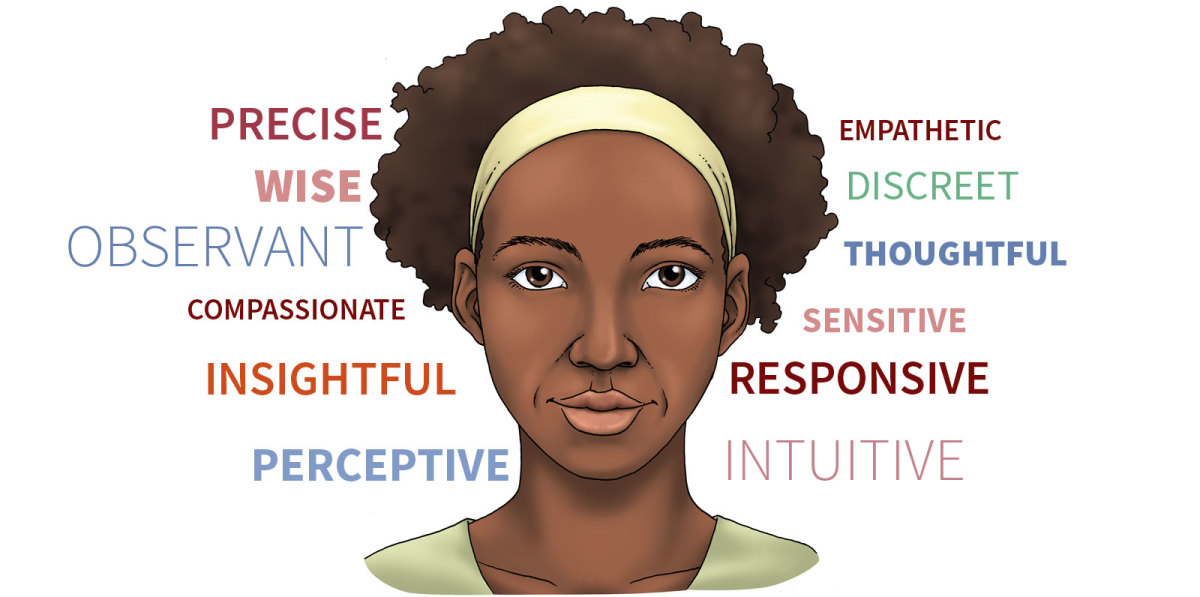
Are You Empathetic?
Words to Describe Yourself Professionally
If you've already been interviewed for a job, you know the question: What would you say is your best quality? It can be an uncomfortable question to answer, especially since you're already nervous about the interview. What do they want to hear?
The good news is that it's possible to be completely honest. Because we can all identify with 90% of these adjectives in some situation or other, I suggest picking 10 to 15 words that describe you most of the time, regardless of the situation. It might be helpful to think about who are you when you are on your own, doing your own thing. There will be very few other people who will identify the exact same combination, because we're all different.
Once you've come up with a few words, think of situations from your life that demonstrate that quality.
Unique Adjectives to Use on a Resume
|
|
|
|---|---|---|
Inventive | Exciting | Thoughtful |
Powerful | Practical | Proactive |
Productive | Professional | Meticulous |
Quick | Balanced | Achiever |
Knowledgeable | Leader | Diplomatic |
Logical | Initiator | Original |
Outgoing | Particular | Patient |
Active | Positive | Consistent |
Compassionate | Incredible | Independent |
Precise | Mediator | Emotional |
Cheerful | Forgiving | Responsive |
Candid | Industrious | Cooperative |
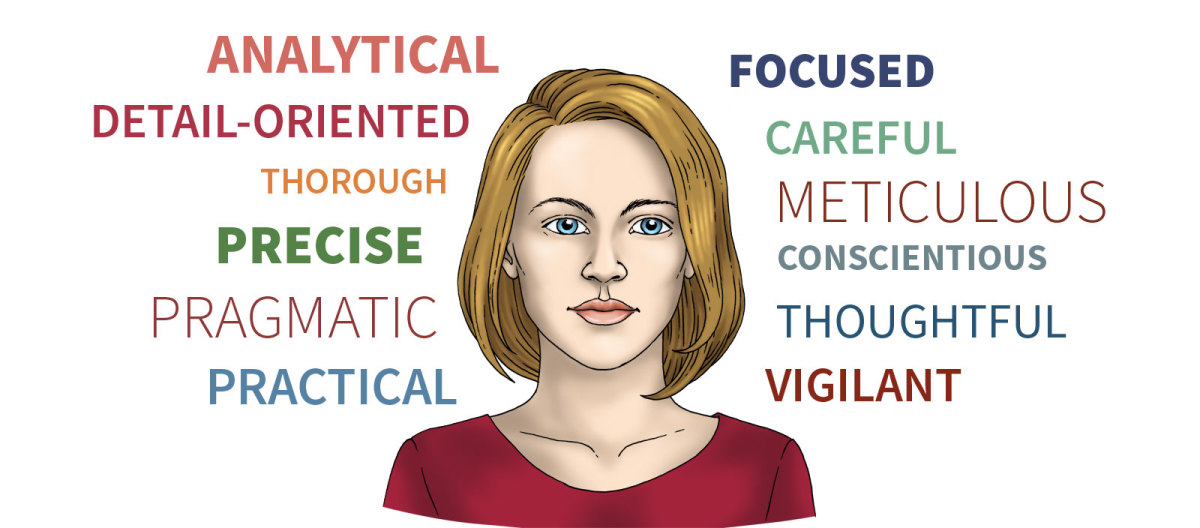
Are You Analytical?
Positive Descriptive Words to Use in a Job Interview
|
|
|
|---|---|---|
Honest | Assertive | Attentive |
Direct | Broad-Minded | Committed |
Conscientious | Dynamic | Customer-Oriented |
Persistent | Mature | Methodical |
Motivated | Objective | Tenacious |
Sociable | Friendly | Realistic |
Reliable | Resourceful | Respectful |
Responsible | Creative | Confident |
Traditional | Trustworthy | Unconventional |
Unique | Ecclectic | Observant |
Innovative | Imaginative | Thorough |
Why It's Important to Know Your Strengths
From my experience delivering training programs and seminars about building confidence and self-esteem, people get very quiet when they're are asked to describe five of their best qualities. "I don't know" is the most common response.
Conversely, we're all pretty good at listing our faults and failings. It's as if people don't dare to ask the question, "What's good about me?"
If this describes you, then it's even more important for you to do this exercise. Words are powerful! If you come up with a list of your best traits, even if it feels awkward to do so, you'll start believing them! This confidence will help you out in both your career and your personal life.
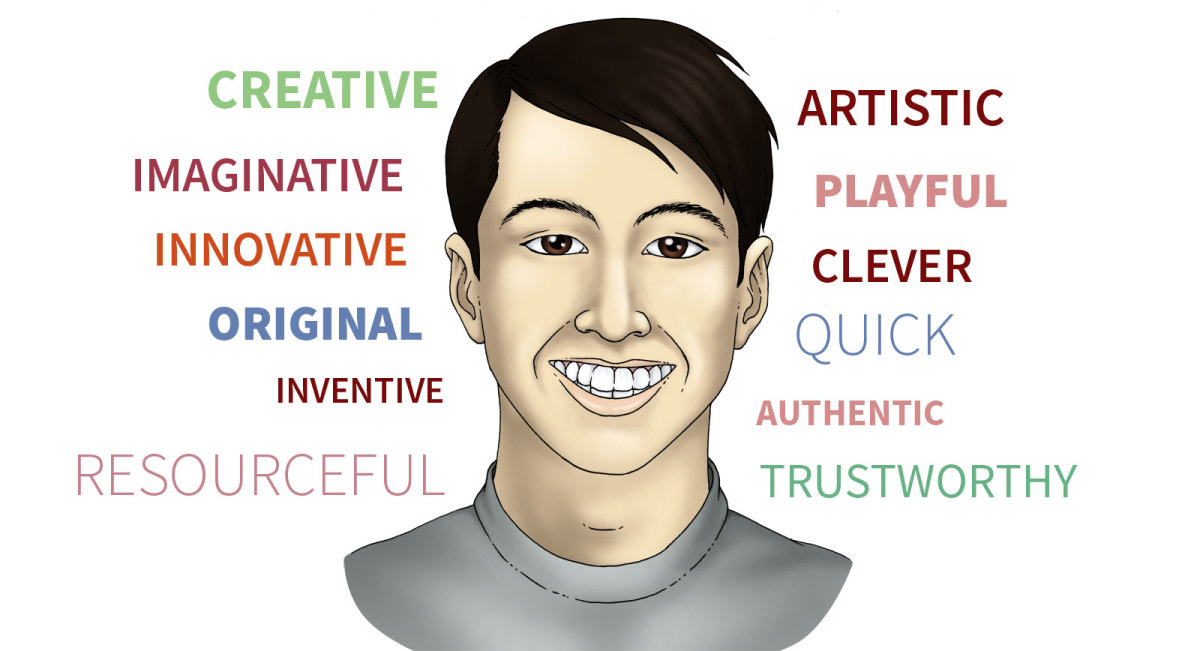
Are You Creative?
Positive Descriptions for College Applications
|
|
|
|---|---|---|
Optimistic | Accomplished | Adept |
Analytical | Articulate | Artistic |
Self-Disciplined | Controversial | Individual |
Tolerant | Reflective | Participatory |
Unselfish | Sophisticated | Commited |
Strong | Successful | Diplomatic |
Talented | Team player | Fun |
Intelligent | Changeable | Passionate |
Intense | Intuitive | Upbeat |
Vibrant | Funny | Constructive |
Hard-Working | Dependable | Direct |
Collaborative | Loyal | Engaged |
Empathetic | Observant | Thoughtful |
Why Do You Want to Describe Yourself?
What made you want to know how to describe yourself?
- For Online Dating
- For an Online Profile
- For My Resume
- For a Job Interview
- To Learn New Words
- For a Self Confidence Boost
- None of the above
Are You Diplomatic?

How to Turn a "Negative" Into a Positive
What would you say if you were asked, "What's your biggest weakness?"
Not sure? You might even wonder why employers even ask such a weird question. The objective with a question like this is to see how a person responds when they're thrown off base a little. It's also a way to force an applicant to reflect on how they've grown or want to grow.
The key to answering this question successfully is to show that you've reflected on your personality and have identified ways to improve.
Come up with a few words that you think describe your negative traits. Here are a few examples:
- controlling
- rude
- shy
Ok, now with a little thinking and reflection these traits could provide insights into your best qualities. For example, a controlling person might have a hard time asking for help. Have you ever wished you'd accepted an offer of help from a friend or co-worker? Are you aware of the benefits of not always being in charge? If so, you're looking for opportunities to let go and work with others for better results.
Rudeness can easily be re-framed as bluntness and honesty. But you may feel that you can be a bit too honest at times. Describe a situation when you said something that may have been true, but that you wished you'd kept to yourself. Then explain that you're working on making your feedback more constructive.
There's nothing wrong with shyness, but you may feel that it holds you back from participating fully. Maybe there have been times when you wished you'd been more assertive. Explain that you're working on speaking up more and overcome your fear of offending others.
Words to Describe Yourself on Online Dating Sites
|
|
|
|---|---|---|
Direct | Enthusiastic | Spontaneous |
Open | Adventurous | Lighthearted |
Communicative | Passionate | Witty |
Self-Aware | Playful | Strong-Willed |
Easy-Going | Intellectual | Silly |
Responsive | Big-Hearted | Intense |
Unique Adjectives to Describe Your Personality
|
|
|
|---|---|---|
Competitive | Political | Socially Conscious |
Modest | Courageous | Enthusiastic |
Enterprising | Entrepreneurial | Facilitator |
Focused | Genuine | Open-Minded |
Wise | Sensitive | Witty |
Sensible | Sincere | Skilled |
Solid | Communicative | Helpful |
Fast | Responsible | Results-Driven |
Results-Oriented | Self-Reliant | Organised |
Knowledgeable | Logical | Personable |
Amiable | Flexible | Adaptable |
Persuasive | Perceptive | Insightful |
Trustworthy | Easy-Going | Visionary |
Imaginative | Warm | Ambitious |
Diplomatic | Curious | Persuasive |
Take This Quiz: Which Words Describe You?
Question 1/12
When someone tells you they are sad, do you feel sad too?
- Yes, always.
- Pretty often, but not all the time.
- No, never.
What to Do With Your List of Positive Qualities
So, how did you get on? How does it feel to identify your positive qualities? Good, I hope!
You may have undertaken this exercise because your teacher asked you to. Perhaps you're about to interview for a job or are making an online profile. In any case, here are some "next steps" to make the best use of the list you've made:
- Look over your list of adjectives. Say them out loud to yourself with "I am . . ." before each one.
- If you are interviewing for a job, look back at the job description and circle all the adjectives and phrases on your list that best relate to the position. Pick two or three words that relate to both you and to the job.
- Be prepared to give examples of specific times when you've demonstrated the adjectives that you've chosen. For example, if you tell the interviewer that you're "reliable," describe projects you have completed on deadline or times when an employer or teacher have commented that they can count on you.
- If you're applying to a school or university, read over the school's website and look for clues about the kind of student they are looking for. All schools want students that are "hard-working," "inquisitive," and "persistent." Show them your unique qualities. Are you particularly creative and imaginative? Are you exceptionally focused and determined? Do you have a big heart for social justice? Toot your own horn!
How Do I Describe Myself?
|
|
|
|---|---|---|
Perceptive | Down-to-Earth | Open-Minded |
Knowledgable | Logical | Analytical |
Quick learner | Genuine | Warm |
Inventive | Rebellious | Generous |
| Insightful |
|